
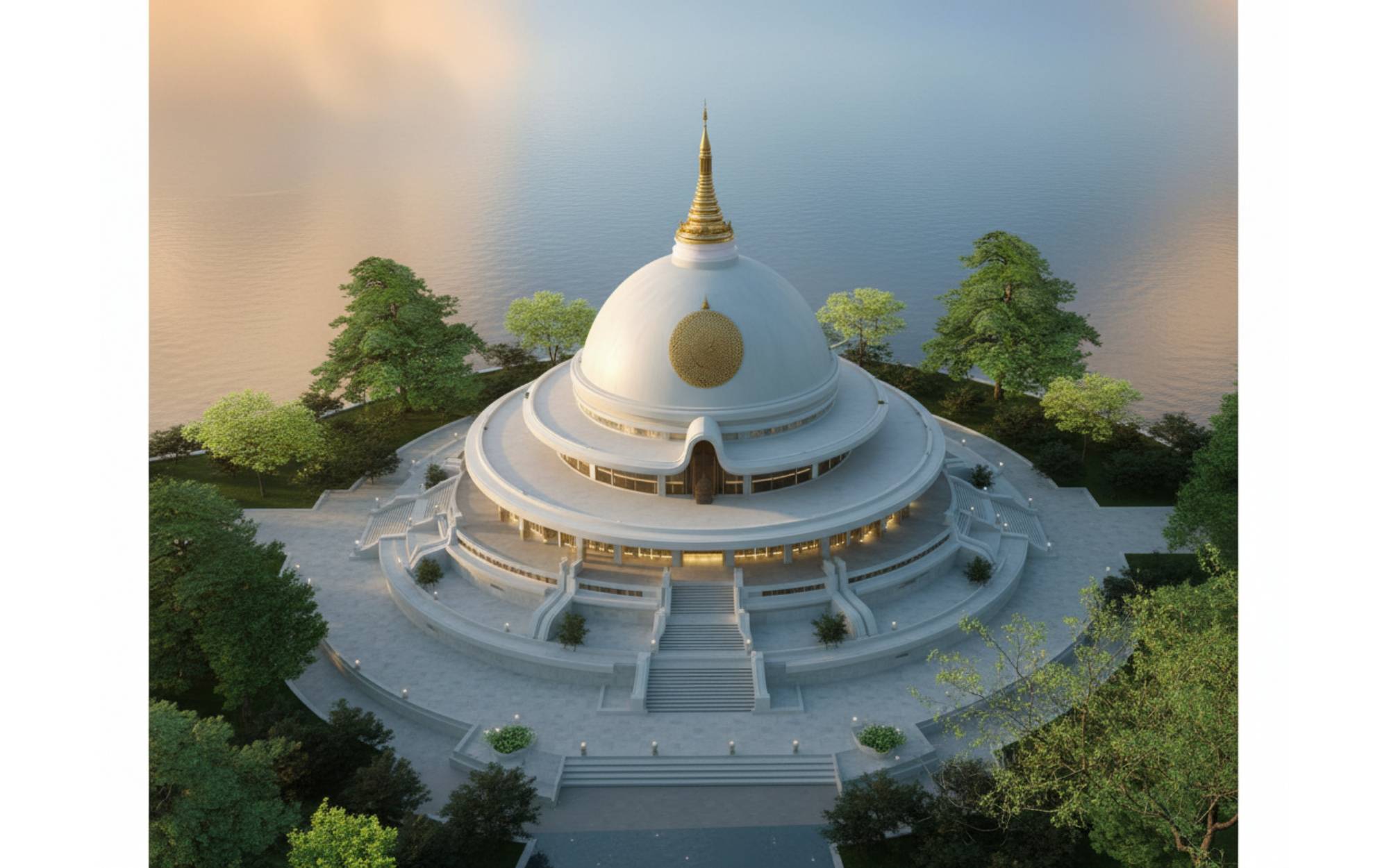
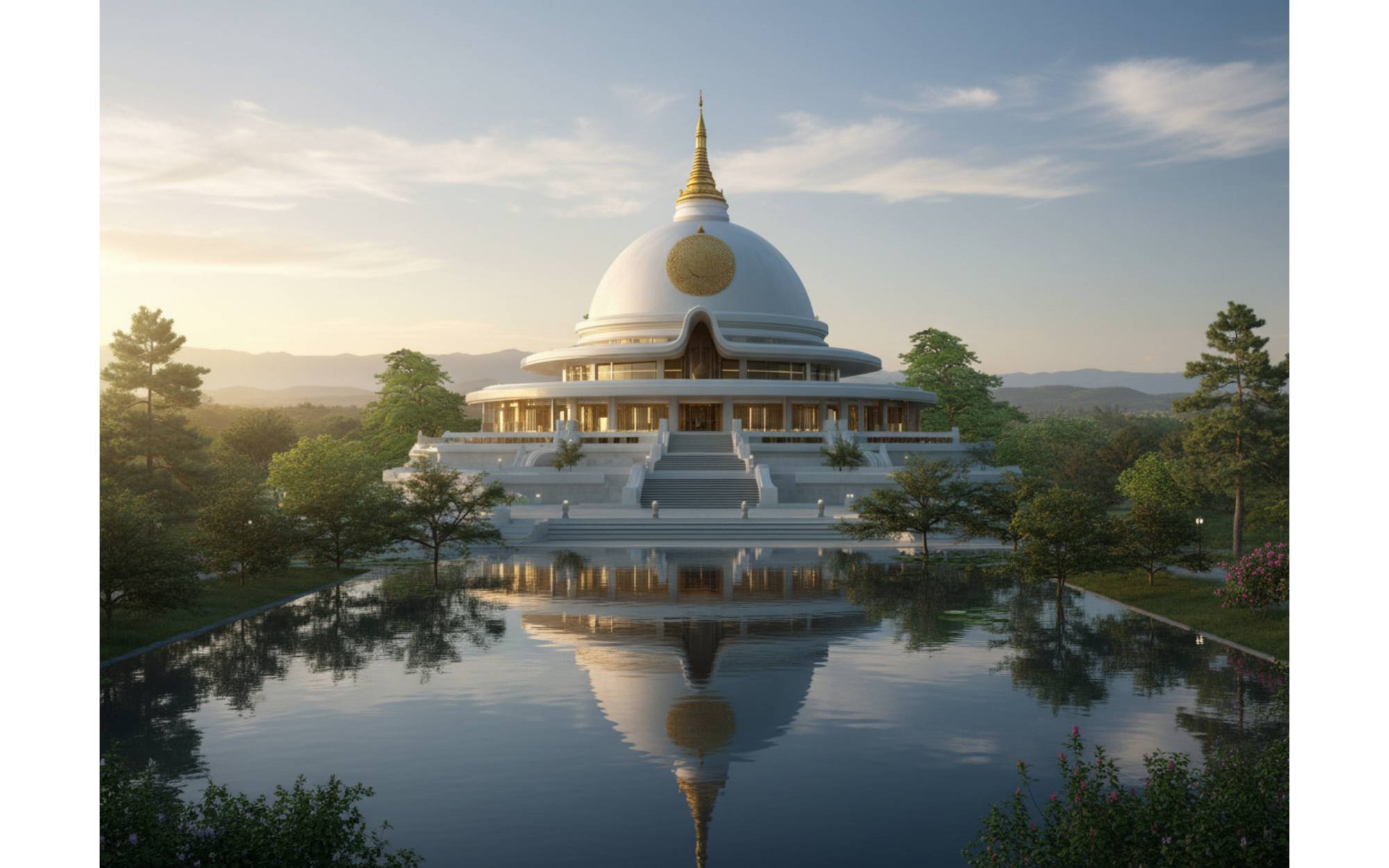
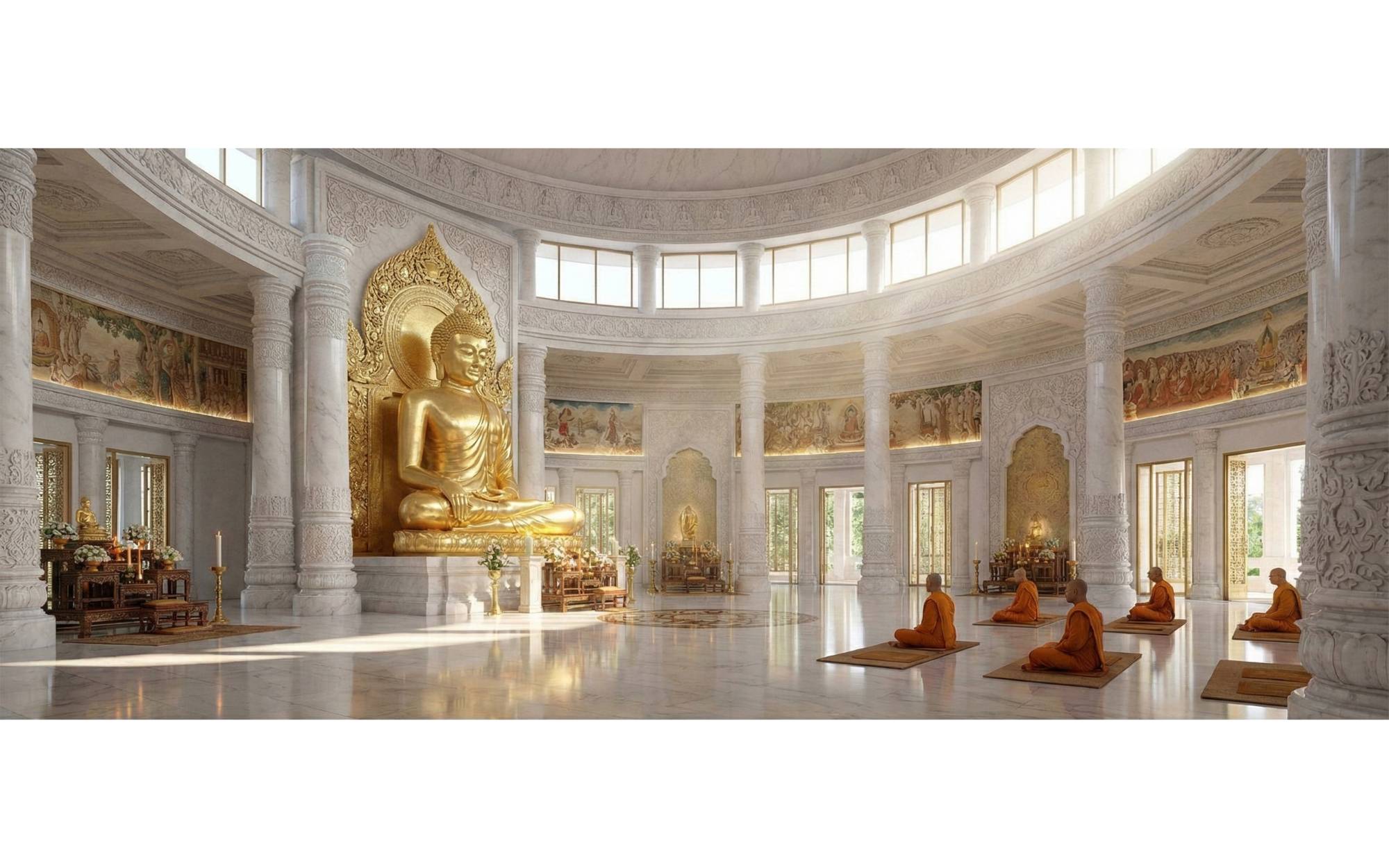
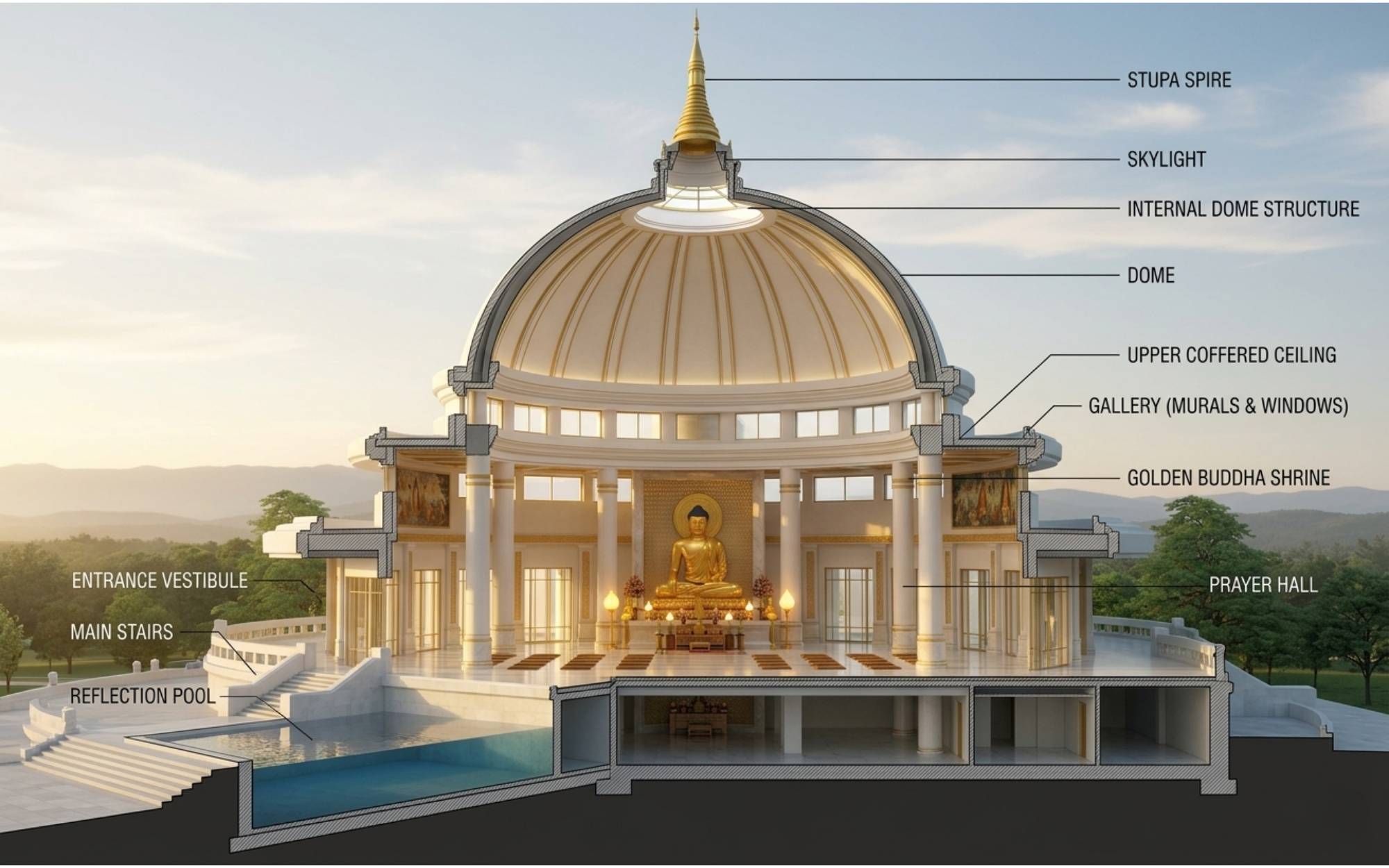
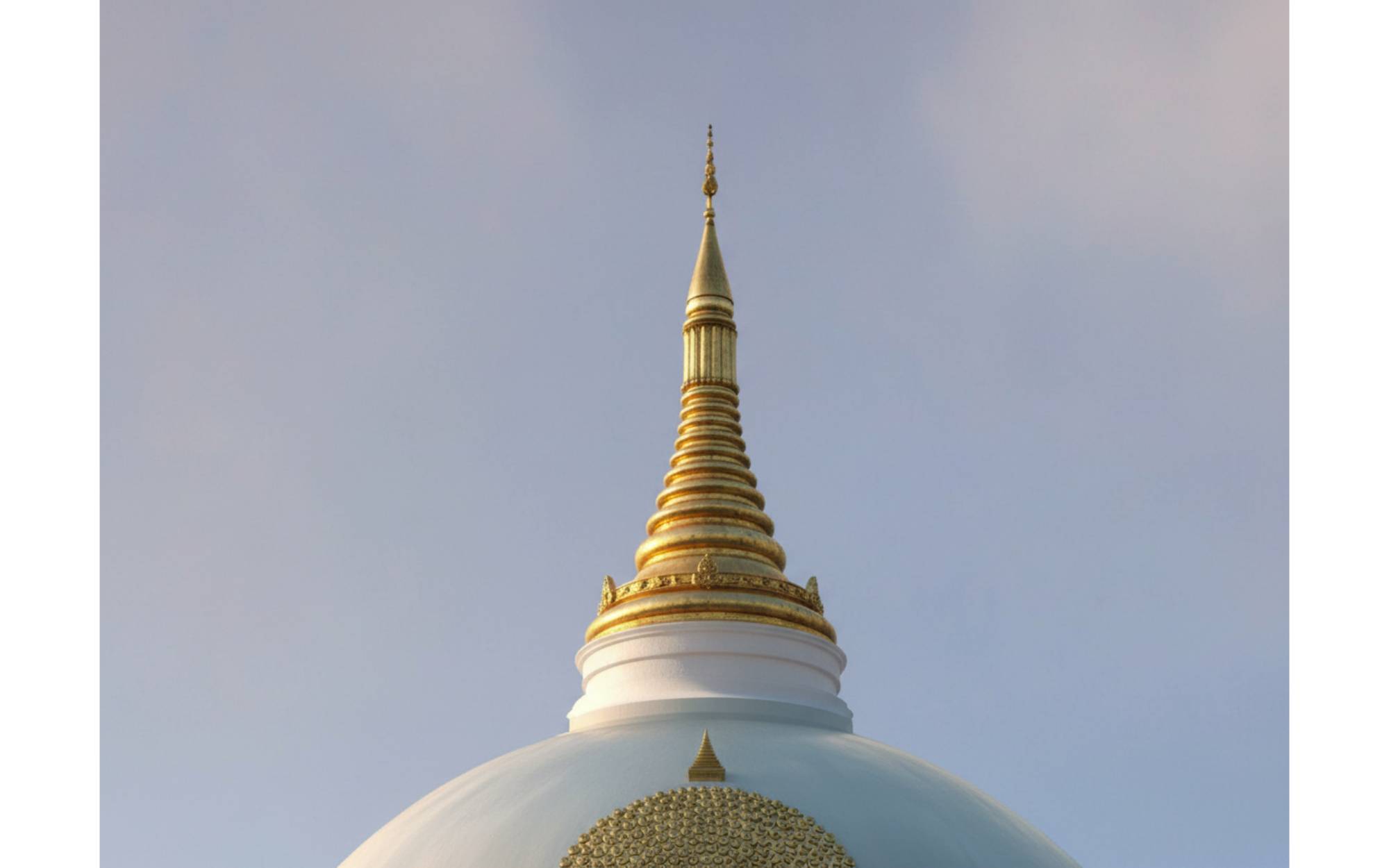
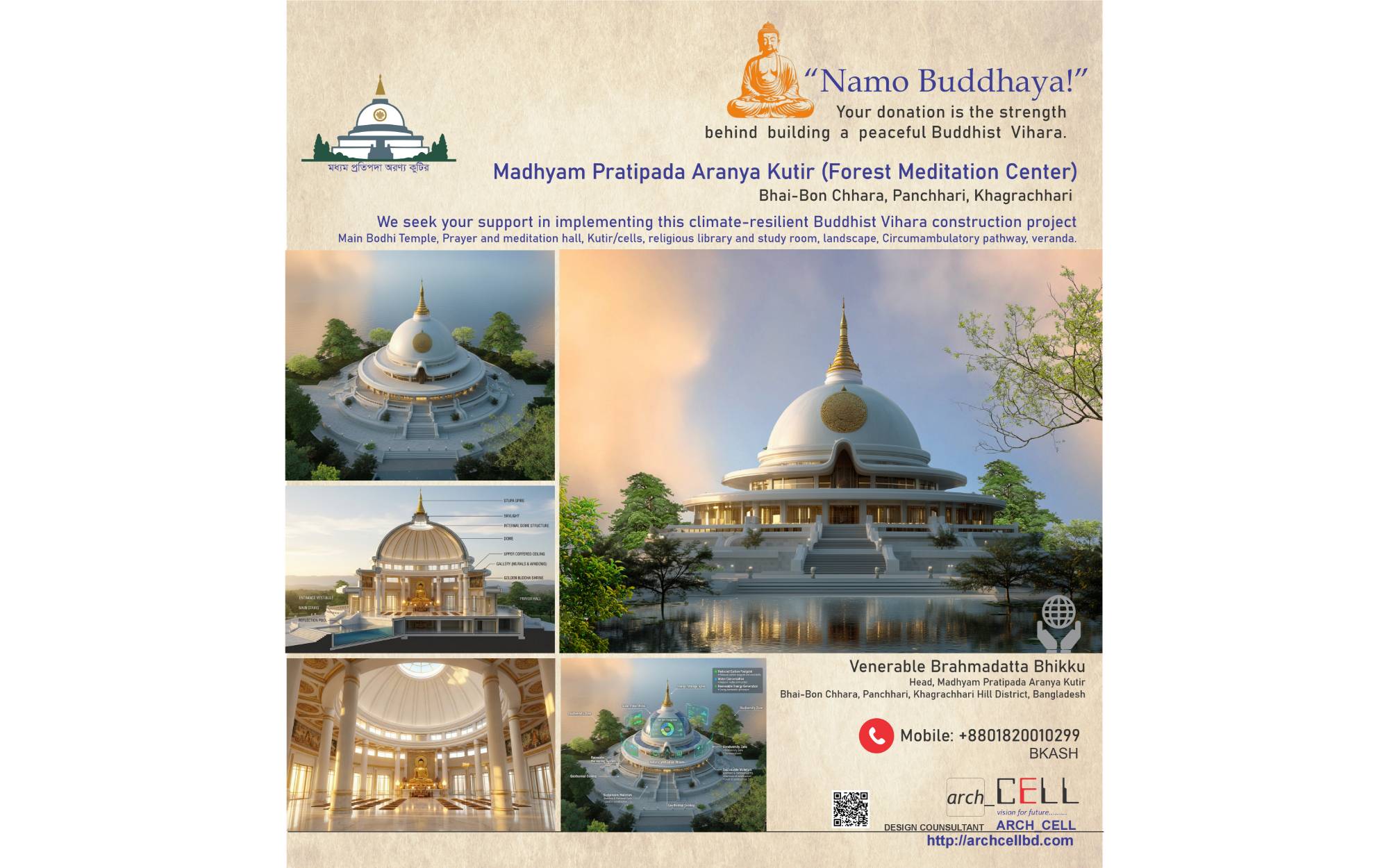
The proposed design of Madhyam Pratipada Aranya Kutir (Forest Meditation Center) at Bhai-Bon Chhara, Panchhari, Khagrachhari presents significant potential to become an exemplary model of climate-responsive and ecologically sensitive architecture within a forest environment. Situated within approximately 200 acres of natural woodland, the project is not merely an architectural intervention, but a spatial and environmental proposition that seeks to establish harmony between sacred space, climate, landscape, and biodiversity. In this context, the design must be understood not as an isolated built object, but as part of a larger ecological system where forest, water, soil, light, wind, and habitat interact continuously.
A climate-responsive design in such a setting demands a careful reading of the local hot-humid climate, seasonal rainfall, natural topography, and the ecological fragility of the forest. The forest itself acts as a major climatic moderator. Dense tree canopy reduces direct solar radiation, lowers ambient temperature, retains soil moisture, supports evapotranspiration, and creates a cooler microclimate that is especially suitable for contemplative and meditative functions. Therefore, the most fundamental climate-responsive strategy for the proposed meditation center lies in the preservation of the forest cover. Rather than clearing the land extensively for architectural expression, the design can derive its strength from minimizing disturbance and allowing the built form to coexist with the existing natural system.
The proposed temple form, with its compact centralized massing, appears capable of reducing the ecological footprint of construction. In a site of this scale, the restraint of built expansion is crucial. A compact architectural footprint preserves larger areas of undisturbed forest, reduces fragmentation of habitats, and maintains the continuity of ecological corridors necessary for flora and fauna. This approach is especially important in biodiverse forest landscapes where excessive road networks, dispersed structures, and indiscriminate hardscaping can irreversibly damage natural systems. By concentrating core functions such as the main Bodhi temple, meditation hall, library, and associated spaces into a controlled zone, the project can ensure that the majority of the 200-acre site remains environmentally intact and spiritually serene.
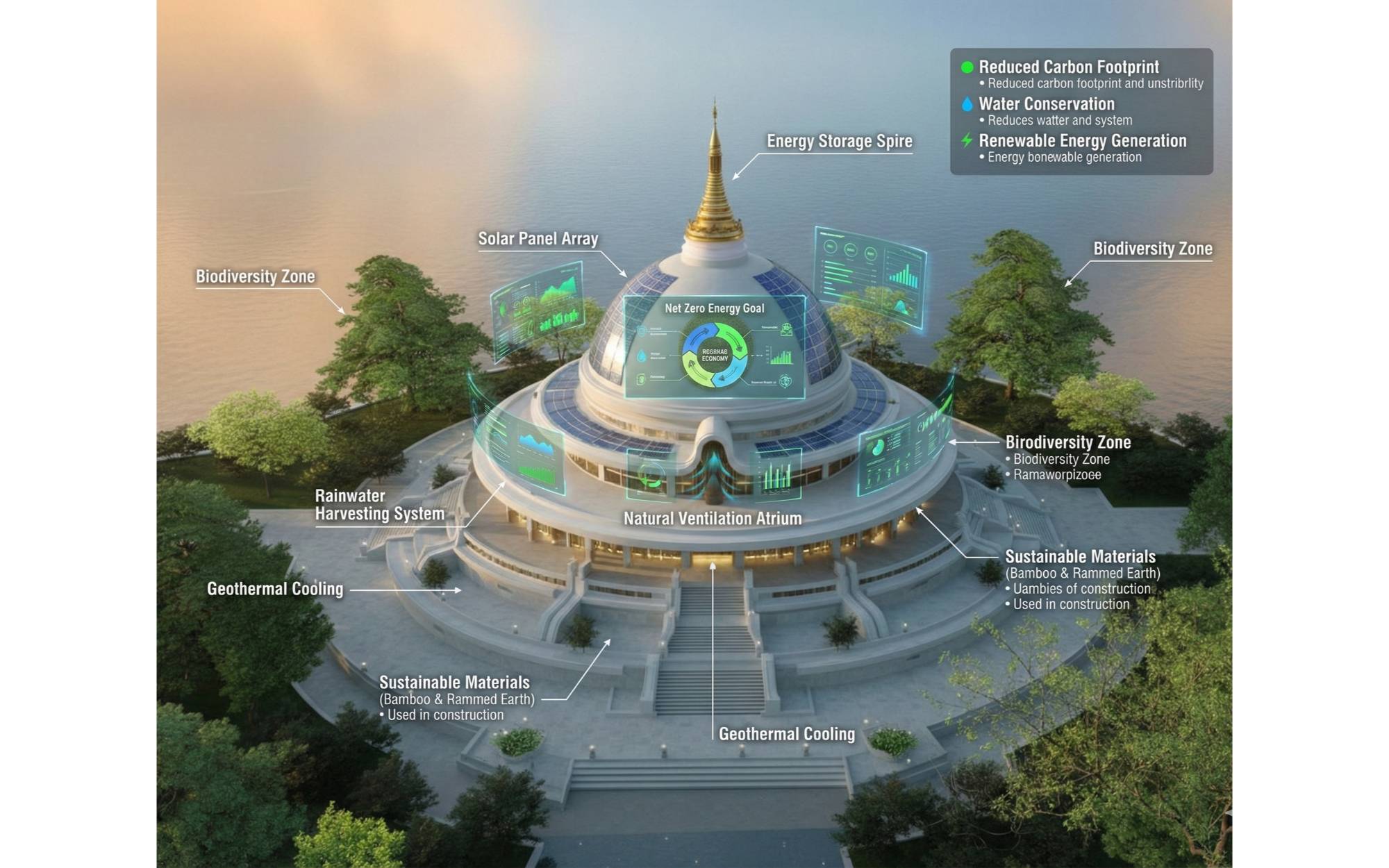
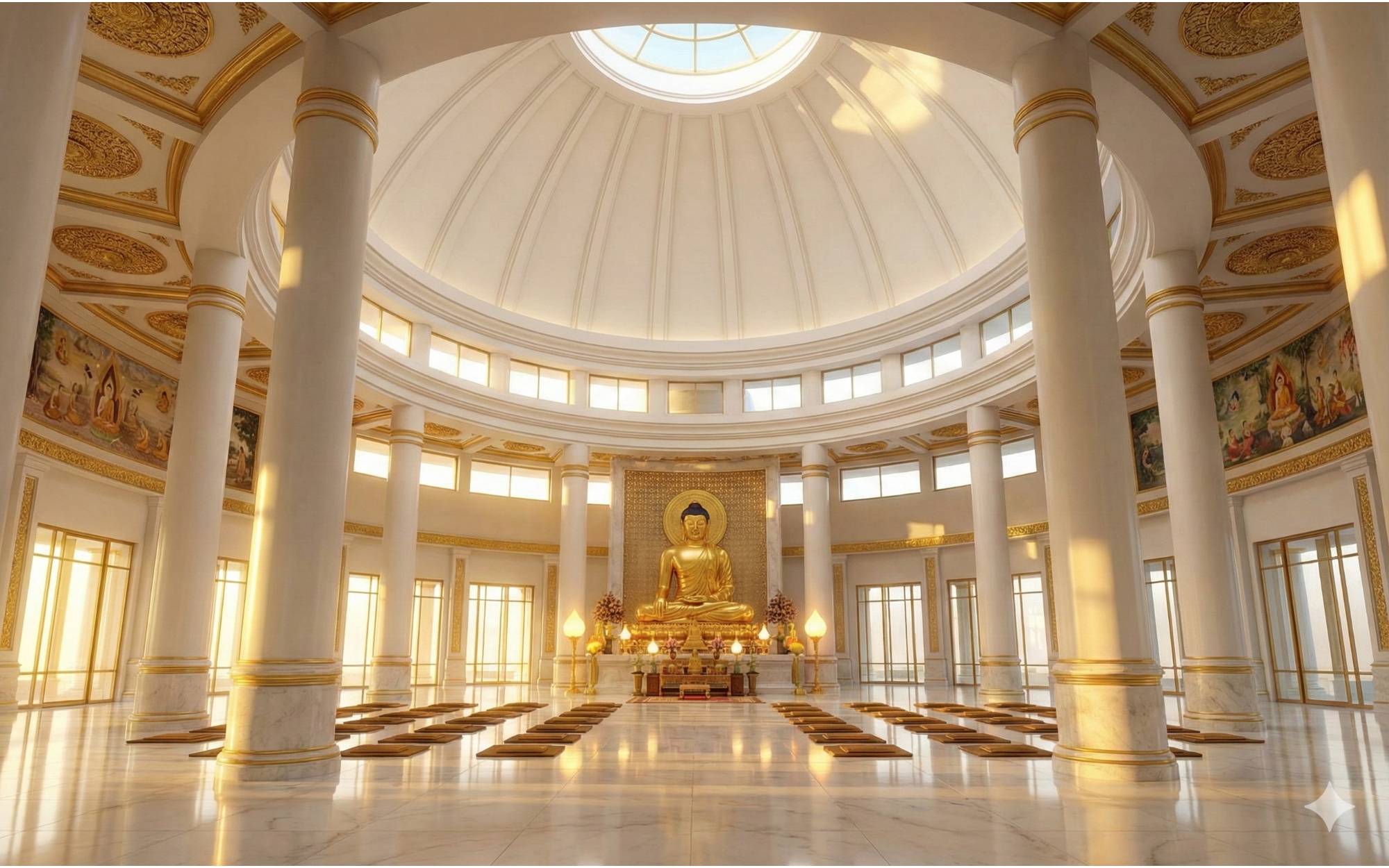
From a climatic perspective, the architectural language of the proposed design can respond effectively through passive environmental strategies. The large dome, elevated volume, open peripheral circulation, shaded verandas, and transitional spaces can contribute to thermal comfort without excessive dependence on mechanical systems. In hot-humid regions such as Khagrachhari, passive cooling is best achieved through cross-ventilation, stack effect, filtered daylight, and protection from direct solar heat gain. The high interior volume beneath the dome can allow warmer air to rise upward, while shaded lower openings can facilitate cooler air movement through the prayer and meditation spaces. Similarly, deep projections, colonnaded edges, and verandas can create microclimatic buffers between interior and exterior conditions, reducing heat load while enhancing spatial comfort.
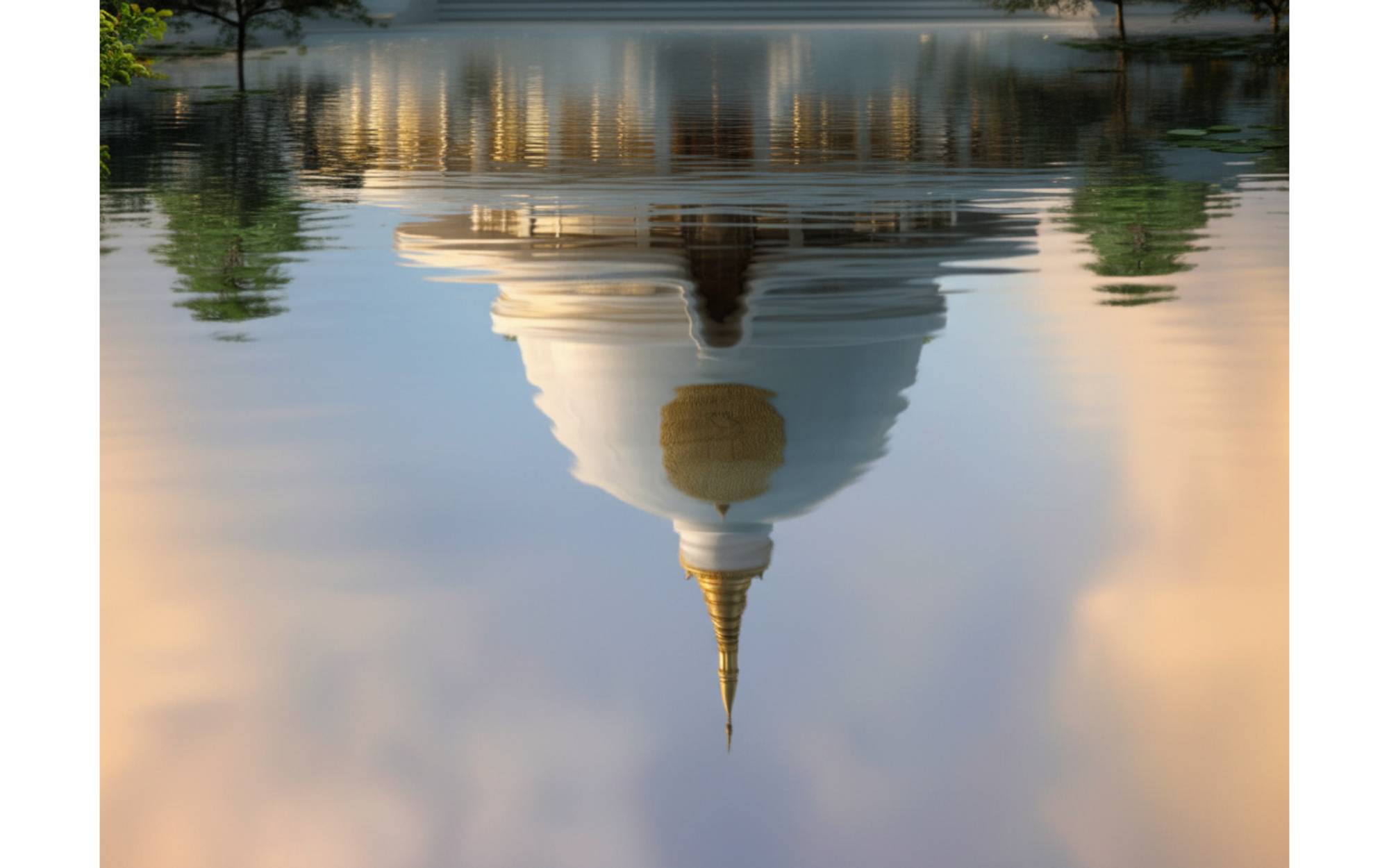
Another essential aspect of climate-responsive design in this project is rainwater and surface water management. The forested hill environment, combined with heavy monsoon rainfall, requires a landscape strategy that works with water rather than against it. Large impermeable surfaces and aggressive cut-and-fill practices would increase runoff, erosion, and soil degradation. Instead, the proposed design can integrate raised plinths, permeable pathways, bioswales, retention basins, rain gardens, and rainwater harvesting systems to slow, collect, and reuse water. Such measures not only improve environmental performance but also preserve the hydrological balance of the site. In a forest meditation center, water can become both an ecological and spiritual element—serving climate resilience, visual serenity, and environmental regeneration simultaneously.
The issue of ecosystem and biodiversity conservation is central to evaluating the design’s environmental responsibility. A 200-acre forest is not vacant land awaiting development; it is an active ecological habitat composed of plant communities, wildlife movement patterns, soil organisms, and natural succession processes. Therefore, the project should adopt the principle of “minimum intervention, maximum preservation.” Existing trees should be retained wherever possible, site zoning should avoid ecologically sensitive zones, and circulation routes should follow natural clearings or already disturbed paths. Meditation trails, access routes, and circumambulatory paths should be designed lightly, with minimal excavation and limited damage to root systems. Landscape development should prioritize native species, avoid ornamental monocultures, and reinforce the local ecology instead of replacing it with decorative landscaping.
The material and construction logic of the proposed center can further strengthen its climate-responsive character. Materials appropriate to a forested hot-humid region should be durable, low-maintenance, and environmentally responsible. The use of locally available materials, breathable surfaces, shaded envelopes, and low-embodied-energy construction systems can reduce both ecological cost and thermal stress. If the project incorporates local craftsmanship, bamboo-based elements, regionally appropriate masonry, stone, or lime-based finishes where suitable, it can establish a deeper relationship with place while also supporting sustainable construction practices. In this way, the project would reflect not only environmental sensitivity but also cultural continuity.
Beyond technical performance, the proposed design carries a deeper philosophical dimension. As a Buddhist forest meditation center, the project naturally aligns with values of restraint, mindfulness, compassion, and coexistence with living nature. This makes the ecological agenda of the design even more meaningful. The architecture should not dominate the forest, but rather reveal it. It should frame silence, light, shadow, breeze, water, and greenery as active elements of the sacred experience. In this sense, climate-responsive design is not only a matter of energy efficiency or environmental comfort; it becomes part of the spiritual and phenomenological identity of the place. The forest is not a backdrop to the temple—it is integral to the meditation experience and the ethical vision of the project.
However, the design can only become a true model of climate-responsive architecture if its implementation remains consistent with these ecological principles. Monumentality alone does not ensure sustainability. If the proposed complex leads to excessive tree removal, heavy vehicular access, habitat fragmentation, light pollution, or hard-engineered interventions, then its environmental intentions would be compromised. Therefore, the project’s success depends on careful master planning, ecological site assessment, controlled land use, and a construction methodology that respects the fragility of the forest ecosystem.
In conclusion, the proposed Madhyam Pratipada Aranya Kutir has the potential to stand as an important example of climate-responsive, ecologically integrated, and spiritually grounded design in Bangladesh. Its significance lies in its ability to merge architectural form with forest ecology, passive climatic response, biodiversity preservation, and contemplative spatial character. By minimizing land disturbance, preserving the natural canopy, employing passive cooling and water-sensitive strategies, and treating the 200-acre forest as a living ecological partner, the project can demonstrate how sacred architecture may evolve as a responsible environmental practice. In this way, the meditation center can become not only a place of worship and reflection, but also a model of how architecture may respectfully inhabit and protect the natural world.
Have a question? Chat with us on WhatsApp and we'll get back to you shortly.